

My journey.Two paths.
The full story of a musical life shaped by classical guitar, marching bands, psychedelic rock, fingerstyle composition, algorithmic systems, electronic sound design, and a willingness to follow the strange route rather than the obvious one.
following
sound
A complete account of how the paths became entangled.
I am a guitarist, an electronic composer, a sound designer, and a musician whose work has continually moved between formal technique and unruly experimentation.
The acoustic path taught me how several musical voices can live inside one instrument. The electronic path taught me that the instrument itself can be reinvented, dismantled, or built from scratch.
Guitar
From classical lessons and three incompatible high-school instruments to the night Hot Tuna revealed how technique could become original composition.
Classical beginnings
I am a guitarist. During my 12 th year I was given Classical Guitar lessons by Oneonta Native Ric Chrislip. Ric had attained local notoriety as a player and teacher in that he was the Guitarist for the Chicago Symphony.
I am very, very lucky to have had him as a teacher. The only problem was that at that point in my life I don’t think I had ever heard a classical guitar being played. I took up the guitar at that age because I was a Beatles super-fan and wanted to sound like George Harrison.
I did not get that result from the classical guitar, and became mystified by the entire process.
Three high-school instruments
My mystification was such that the guitar lessons lead me to three completely unrelated instruments in three different high school bands. I played the electric bass in the jazz ensemble, the bass drum in the marching band drum corps, and the tuba in classical concert band. The bass guitar actually made some sense, given my ambition to some day play electric guitar.
However, I was not in receipt of any dedicated bass guitar instruction at Morris Central School, I was constantly attempting to transcribe my parts from What I knew of Classical Guitar. In my head, on the fly, as we were playing. I was 14 when this began.
I guess those parts should really count as my first forays into the Avante-Garde. Luckily, I had a comrade in the drummer Dwayne DeLong, two years my senior. He was, and remains, a fantastic musician.
The jazz band would travel around the area to various competitions with other schools, and standing in the rhythm section next to Dwayne and his drum set, it was impossible for anyone to sound bad or look foolish. The jazz ensemble one a lot of awards. For the first time ever, I could get a girl to go to the movies with me.
The bass drum was quite heavy, strapped to my midsection. I must have had a very strong back. The Morris Central School marching band marched in parades and county fairs all summer long.
The routes could be miles long, and at times the temperatures topped out at over 100 degrees Farenheit. Again, Dwayne was the leader of the drum corps of the band, whose instruments were by and large the heaviest, and he got us through each parade. The Marching Band travelled around from gig to gig in school buses that were co-ed and everyone changed in and out of their band uniforms together. (I admit that I thought at the time that seeing most every female classmate in her underwear was a pretty good recruiting tool for the band.) If the day was hot enough, a lot of us would just hang out on the bus for a while in our underwear to cool off before hitting the fair.
I don’t remember anyone being concerned about this, and everyone followed the unwritten rule not to make others uncomfortable, as far as I could tell. Looking back on this time in my life in the current context of the Me-Too movement, I’m amazed that that both we (teenagers) and our (minimal) adult supervision, were this loose. If busloads of kids were all changing their clothes together on the bus now, everyone would be arrested and cancelled for life.
“Cancel that high school freshman! He’s gonna be bad! I can already tell!” The tuba was, in my experience, a disturbing instrument.
Putting one’s face into something cold and metal and lip-farting into it for long periods of time was way too wet, it smelled, and don’t get me started on the taste. I developed rashes around my mouth and looked like I’d been attacked by some sort of mega-cold sore. The problem was exacerbated by the fact that no on explained the spit valve to me for the first six months that I played the instrument.
When my tone got particularly, uh, “wet” during one concert, the lead saxophonist leaned back and snapped the valve open (I had no idea what he was doing). This released a dribble of months-old condensation which smelled so bad that it immediately permeated the entire concert hall. Our music teacher, the conductor, gagged, and parents bolted for the exits.
A widening musical world
For the next few years I branched out widely from teenage pop and rock in my listening. By my junior year of college, I was consuming a pretty eclectic mix of folk, jazz, electronic music, classical music film soundtracks and avante garde experimentalism, keeping a firm foundation in 1960’s and 1970’s psychedelic rock. I was listening to a lot of improvisation.
A typical listening session might include Bob Dylan, Jefferson Airplane, Vince Guaraldi, the Paul Winter Consort, Brian Eno in his various collaborations, Frank Zappa, Gyorgy Ligeti, Ennio Morricone, Captain Beefheart and The Fugs. I was far afield from The Beatles, The Stones, and Wings, although I still loved those bands as well. Many of the more obscure artists I found were brought to me by my friend Grant Miller., himself a gifted and classically trained guitarist.
I began seeing as many Grateful Dead shows as I could with friends from my former high school days. I had gone from Bucknell University to SUNY Oneonta by 1986, and was looking somewhat desperately for what came next in my life. Bucknell seemed primarily preoccupied with perpetuating Caucasian Fraternity culture: Black out drunkenness, selecting mates within one’s own socio- economic class (and then date raping them while intoxicated), and assuring that the children of Philadelphia’s New Money set met with job offers upon graduation.
Over the couple of years that I attended this meat market/human-packaging consortium, I learned that successful movement through the upper economic strata had a surprising amount to do with figuring out the proper shoes for various different occasions. I had always felt confident in the future, but when I was twenty I experienced for the first time a depressive directionlessness. My only productive experience at Bucknell was twenty minutes spent listening to Terry Riley’s A RAINBOW IN CURVED AIR when our music professor surprised us by playing it in class.
The Halloween that changed everything
Jerry Garcia fell ill in the summer of 1986, which meant there was no Grateful Dead fall tour. There was, however, a replacement show of sorts for the traditional Halloween gig: A dead off-shoot called GO AHEAD, featuring Bill Kreutzman and Brent Mydland, was scheduled to perform that night in Passaic, New Jersey. We were almost late, which would have changed my life on such a level of fundamental meaning that my only cogent response to the possibility that things went differently is complete bafflement.
I don’t know what the other possibilities for my life would have been. Perhaps there would not have been any other possibilities. I was working as part-time maintenance staff in my Father’s student apartments at the time, and was charged that morning with a few minor tasks, chief among them replacing a toilet seat in Apartment 2D.
The plastic bolts that heald the seat to the toilet wouldn’t loosen with a screw driver, so I thought “Well, I’ll loosen this toilet seat up by tapping it ever so slightly with a hammer.” Just a couple of little... taps. Cracks began to spiderweb slowly down the toilet’s bowl, then faster and faster. Then the bowl disintegrated into a pile of dust, the water splashing out and all over the bathroom.
The tank, formerly heald up by the bowl, but now teetering at the end of a single thin copper pipe, swayed back and forth a couple of times and then collapsed to the floor, smashing into tiny pieces. (Gravity really does a number on porcelain.) More Water. The need to install an entirely new toilet into the bathroom of apartment 2D, this being after considerable sweeping, mopping, and other debris abatement, caused a substantial delay in our travel plans. I was also forced to enlist the aid of the Maintenance Supervisor, who really wasn’t that much help, because he couldn’t stop laughing.
Also, my Father found my predicament so amusing that he kept bringing his friends, business associates, and other Main Street proprietors into the small bathroom to show them the situation. “Look at what my son did! Can you believe it?” We (Myself, my girlfriend Suzie, my friends Phil Gustafson and Martha Monser) arrived in Passaic about 15 minutes before the opening act went on stage. 3 chairs on stage.
Then three men sitting in those chairs, each wearing Groucho Glasses, with the funny rubber noses and the fake moustaches. That opening band played two sets. 3 hours. And they changed my life.
The opening band was Hot Tuna. Halloween in Passaic was the first time that I had the opportunity to be in the same space with, and really pay attention to, someone playing fingerstyle guitar who was playing original compositions. Jorma Kaukonen’s playing was a revelation in so many ways.
During that evening, something clicked in my head about how to use my classical training to make my own music. I wasn’t that interested in the classical repertoire, but I was passionately fascinated with the idea of composing my own music. Jorma was on stage showing me that it could be done using techniques with which I was already comfortable.
Halloween was on a Friday. We ascertained the Hot Tuna was playing the next night at a bar (pretty famous bar for live music, actually) called My Father’s Place in Roslyn, on Long Island. We had planned to return Saturday morning to Oneonta, but early that morning we changed our plans and made for Roslyn.
We faced a hurdle in that the drinking age was twenty-one. Phil, Suzie and I were twenty, Martha was nineteen. We found the owner of the bar puttering around before opening on Saturday afternoon.
We explained that we were in the throes of a religious experience and could we please attend that evening’s show, if we promised to drink Coke instead of beer. The fellow was a bit hesitant at first, but here’s the thing: You don’t runa bar that’s famous for live music unless you yourself have a deep and abiding passion for the music. Our earnestness touched something in this gentleman, and he sold us the tickets.
The owner was a fairly compact fellow. That night’s bouncer, however, was a giant who looked just like the huge bald man on the Mr. CLEAN cleaning fluid bottles.
We explained the situation, and after a fairly stressful twenty minutes he was able to phone his boss, confirm our story, and let us in. We really did drink Coke all night. After a bit of time, I noticed Jack Cassidy standing at the bar nursing a pre-show beer.
I had never talked to a celebrity before, and I was VERY nervous. I approached him by myself, because it felt to me imperative that I communicate how much his band and the last evening’s show had meant to me. I was also a wet-behind-the-ears twenty year old, and I didn’t quite know what to say, so I said, “I’m here with some friends.
You guys really blew our minds last night.” Again, had Jack been dismissive, contemptuous, or, frankly, unreceptive in any way, my life could have turned in another direction at that moment. I probably wouldn’t be a musician, and I almost certainly would never have written a single note of my own music. The weight of this moment didn’t hit me while it was happening.
But over the ensuing decades, I’ve thought many times since this conversation how wrong it could have gone, and how crushed I would have been if it did. But what Jack Cassidy actually said to me was “You know, somehow I never tire of hearing that.” We talked for about 10 minutes. Phil, Suzie, Martha and I left at 4 AM, and the band was still playing.
Learning to write into the instrument
I began with some more classical lessons. MY teacher was named Tony Sano, and and we met in the back room of a music store in Albany called Drome Sound. Among other fingerstyle and classical exercises, Tony wrote me out a transcription of The Beatles BLACKBIRD, which I proceeded to play over and over again on a daily basis.
When we were twenty-four years old, Suzie and I got married and moved to San Francisco together. My old friend Grant Miller, originally from Oneonta also, was already there with some other friends. Grant proceeded to take me under his wing and began to act as my informal music instructor.
This mentorship was largely unspoken – we didn’t talk about him being my teacher – and enormously effective. Grant introduced me to all sorts of new music, but more importantly he tutored me in composition, even co-writing some pieces with me. BLACKBIRD is in an alternate tuning (Open G), and Grant showed me others.
This built a lifelong fascination with altering the tuning of the guitar so that the tuning becomes a dimension of the composing process. This became an integral component of many of my guitar and percussion orchestra compositions. With the guitar, he taught me how to write INTO the fingerstyle picking technique.
Picking with three fingers and the thumb, he showed me how to build melody, harmony, and counterpoint into a simultaneous execution of multiple moving parts. Within less than a year of moving to San Francisco, I was writing my own fingerstyle guitar material. Suzie and I eventually divorced after a couple of years, but I think in the meantime she was quite relieved to listen to something other than BLACKBIRD night after night.
We both have Grant to thank for that.
“During that evening, something clicked in my head about how to use my classical training to make my own music.”The Hot Tuna revelation
Electronic music
Algorithmic composition, MIDI systems, recording media, radical sound design, and an expanding set of approaches that now includes keyboard writing, Electronic Percussion Orchestra, Direct Digital Synthesis, and Mutation Synthesis.
Electronic foundations
I have been composing for acoustic instruments and electronic music systems since my undergraduate years. My last year of college was spent studying with Electronic Music Pioneer Joel Chadabe at SUNY ALBANY. Joel specialized in compositional algorithms that set up evolving musical systems where the composer was able to exercise power over the evolving piece on a macro level, rather than specifying each note.
I had fairly minimal music education in my formative years, and Joel’s systems allowed me to learn the art of composition rather quickly.
Intelligent Music and early AI
These systems were based on pattern recognition: Learning and then propagating limited sets of pitches, rhythms, amplitudes, timbres, etc to create a cohesive piece of music. Joel started the company INTELLIGENT MUSIC, where I subsequently worked for two years, to monetize his ideas. We were essentially working with very early ARTIFICIAL INTELLIGENCE, which in our case manifested as the analysis and regenerate of patterns found within discreet number sets (which could equate to pitches, note values, rhythms, etc.) The two most prominent INTELLIGENT MUSIC products are M, a software set of Algorithmic Composing Tools, and REALTIME, an innovative software sequencer that introduced many of the sequencing structures and systems that are now commonplace in such industry-standard production software as ABLETON, FL STUDIO, and PRO TOOLS.
From algorithms to written composition
During my time at INTELLIGENT MUSIC, I took what I learned from the evolving systems that could be created in M, and began experimenting with wrote (non- algorithmic) composition for electronic sound systems. The vast majority of my electronic music compositions have been realized without algorithms, although I think it would be fun to learn some current software, set up some evolving systems, and listen to how they play out.
Mills College and teaching
After spending a few years in the San Francisco Bay Area refining my approach to composition, I received an MFA in Electronic Music And Recording Media from THE MILLS COLLEGE CENTER FOR CONTEMPORARY MUSIC. This is essentially a degree in composing music for electronic instruments and systems. At MILLS the focus was on writing music through improvisation and radical sound design techniques.
Here I studied with the composers Alvin Curran and Maryanne Amacher. I subsequently taught Sound Design and MIDI Programming at Cogswell Polytechnical College for 2 years 1994-1995.
Traditional Keyboard Music
Piano tradition translated through synthesizers, electric pianos, jazz harmony, organ, and contemporary keyboard sound.
1. Traditional Keyboard Music. This is virtually identical to writing for the piano, though my keyboard pieces are realized on electronic instruments, usually synthesizers or electric pianos.
These pieces vary from those overtly influenced by the classical canon to jazz-infused piano music to contemporary organ and synthesizer works.
Percussion Orchestra Music
Science-fiction stories mapped into detuned percussion, non-Western instruments, pitch bend, and marching music for impossible armies.
2. Percussion Orchestra Music. Fairly early on in my electronic writing, I found that I was creating science fiction scenarios in my head, and then mapping these worlds and stories musically.
I had several ways of approaching the new worlds and fantastic creatures that I was thinking up, including ambient soundscapes and some radical sound design techniques, creating new places defined by the extraordinary and unique timbres found there. One of my favorite scenarios involved the Ents, JRR Tolkien’s army of giant warrior trees, marching on Washington DC to protest climate change. If the Ents were going to march, then they needed marching band music.
Remembering my time in the marching band drum corps, I began writing marching music for what can best be described as Science Fiction Percussion Orchestra. This involves writing for non-traditional pitched percussion instruments, often involving instruments from non-Western sources. The available timbres of these sound sources are then further altered by detuning them from standard western scales, and adding pitch bend and other techniques to further detach the sound from it’s original source.
Direct Digital Synthesis
Computer software and digital hardware used to create new timbres or transform existing sounds into something fundamentally different.
3. Direct Digital Synthesis. My third type of writing approaches sound design on a much more fundamental level.
This involves utilizing computer software and digital hardware to either create new timbres from scratch or alter existing sound samples to transmute them into fundamentally new sounds. While the technologies I use in this aspect of my work can be used to create or augment traditional instrument sounds, that tends not to be where I take things in my own work. I look towards new sounds, timbres that are unique and beautiful on a fundamental level divorced from Western Music tradition.
I’m fascinated with the ability to transmogrify dark or frightening sounds into timbres that are in some way comforting. Comforting sounds are not always soothing. At times the reassurance and comfort comes from a sense of benign power that suffuses the resulting sounds with true force. (See, for instance,...
There Were Bees Everywhere In The Room — 2026 Remix)
Mutation Synthesis
Simple waveforms rapidly switched and recombined into composite waveshapes, complex harmonic spectra, and concentrated altered listening states.
Developed with former students, Mutation Synthesis digitally switches between two or more simple waveforms at a rate faster than the frequency of either source. The original waveshapes morph into new composite forms with complex harmonic spectra.
This method became central to Mantis, a fifteen-part sound collage designed for close listening rather than background use. It represents a concentrated extension of the electronic path: focused, immersive, and concerned with the way sustained attention can change the listener’s perception of sound.
Four albums. Four ways into the journey.
The history on this page continues inside four distinct album worlds—acoustic, symphonic electronic, altered-state sound collage, and collaborative pre-release work.
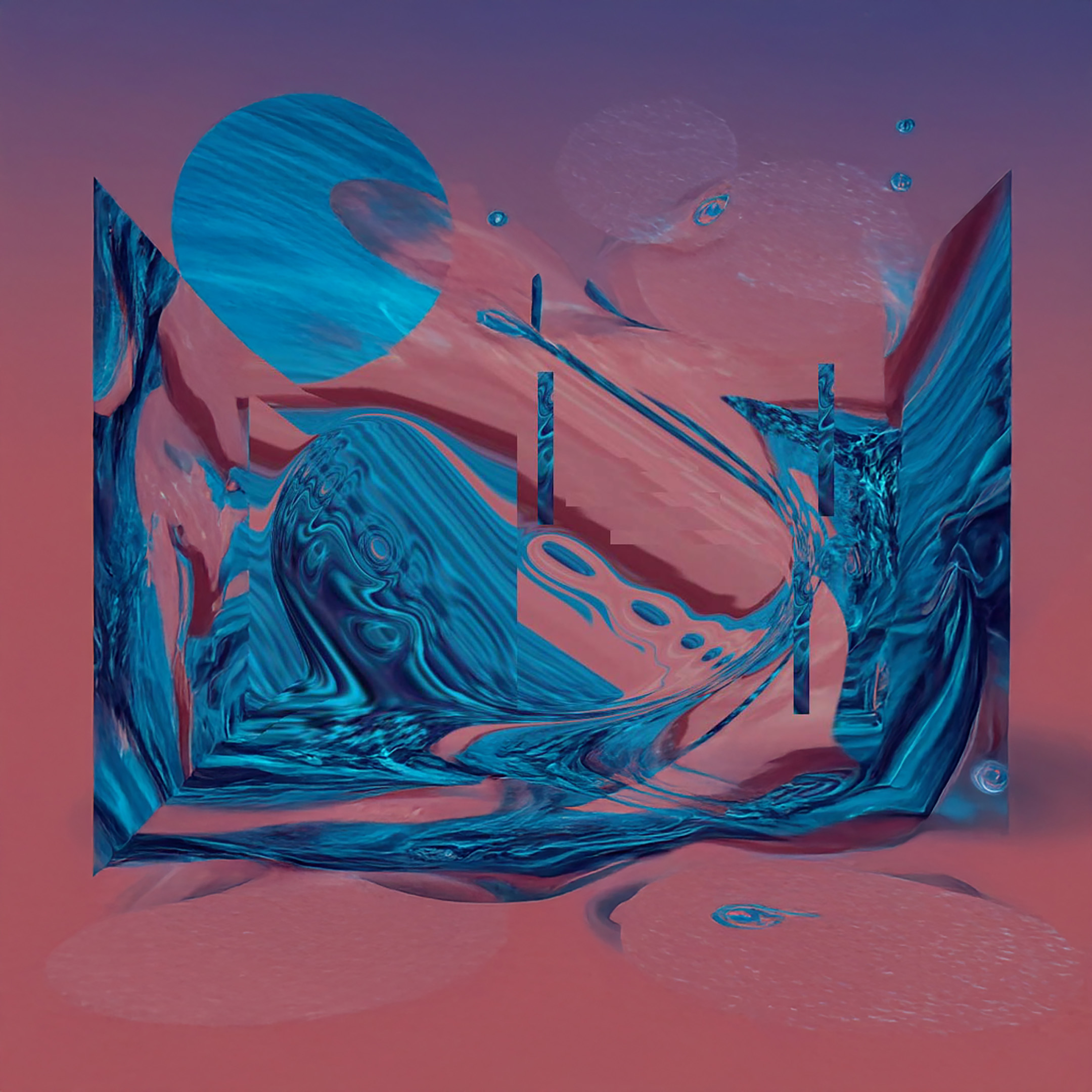
Promethean Conception
Twenty-three works connecting solo keyboard, Electronic Percussion Orchestra, Direct Digital Synthesis, transformed sound, and large-scale musical architecture.
Explore the album →
All New Good Songs for Guitar
Fourteen solo steel-string compositions shaped by relationships, animals, memory, separation, alternate tunings, and return.
Open the songbook →
Mantis
A fifteen-part sound collage designed for close listening, centered on Mutation Synthesis, composite waveshapes, complex spectra, and trance-like focus.
Enter the altered state →
Electronica For Mammals
A collaborative electronic album by Seth Clark, Hugo Keith, and Grant Miller featuring electronic percussion orchestra, multi-timbral synthesized soundscapes, and four preview tracks.
Hear the pre-release →The path remains open.
Continue into the catalog, where these histories become four distinct album worlds with complete stories, videos, technical notes, and evolving collaborations.